This topic introduces the concepts of branches, departments, and sale types in Q360.
Note: The decisions you make from this information are reflected in the Sale Types and Department definitions in the Core Setup workbook.
Branches
A branch represents a physical location for your company. For example, branches may be defined as Head Office, New York, and Toronto. There are also instances where branches can be used to setup pseudo locations and may be defined as Demo or Service.
Branches affect two key financial attributes in Q360:
- Inventory: Each branch can hold inventory and branch level inventory can be reported
- P&L Segment/Subaccount: All sales and cost transaction processed can be attributed to a branch allowing you to report profit and loss by branch
Departments
Departments are used for setting up profit center and cost center accounting, impacting P&L segments.
- Profit Center: Classifies jobs in business lines to accurately drive P&L segmentation such as Security, AV, and IT, allowing you to report P&L by profit center. Additionally, these departments would have revenue and COGS allocation.
- Cost Center: Departments where costs are associated, such as Admin Operations. In many cases there are shared resources for personnel such as technicians and engineers that support multiple profit centers. Shared resources are considered cost centers. The cost of these resource is automatically transferred to profit centers when they charge time towards jobs.
Due to the dual-usage nature of the department list in Q360, it is important to communicate to all personnel within the organization (especially sales staff), which department is expected to be selected for the various types of sales that the sales staff typically make. Additionally, make sure to include controls at the order approval stage to verify the correct department is selected, prior to commencing the job.
Sale Types
A sale type identifies a job type and how it is fulfilled. For example, a sale type of “Design Build” will be processed and fulfilled as a project. The sale type is typically identified at the beginning of the sales process when building a quotes and proposals. Sale types have two main purposes in Q360:
- Fulfillment methodology: How quotes and orders managed and fulfilled for each of the following:
- Projects
- Service calls
- Independent orders (box sales)
- Service contracts
- P&L automation: How sale types are configured to automatically hit specific revenue and COGS accounts as well as the main GL account.
GL account structure
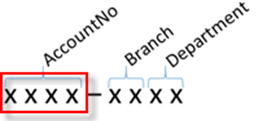
The image below demonstrates the GL account structure, combining the account, branch, and department numbers.